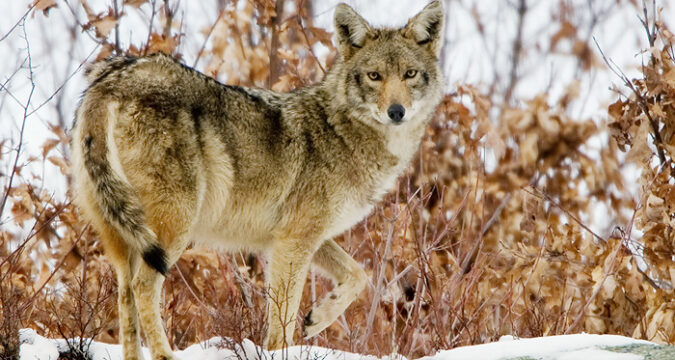
State and local officials are advising residents to remain vigilant after a coyote recently chased a couple of people near a high school.
Police said coyote sightings have been reported in several areas of the city of West Haven, and mostly in the area of West Haven High School.
“Please remember that coyotes are common in Connecticut and are generally not a threat to people,” police wrote in a post on Facebook.
“However, they are wild animals and can become aggressive. Today this coyote chased a couple of people near the high school. Fortunately there were no injuries reported.
“We are working with our animal control and our state friends at the DEEP to assist with the safe relocation of this coyote,” according to the post.
Connecticut’s Department of Energy and Environmental Protection said coyotes are well-adapted to living near people, however they can pose risks to pets, livestock and occasionally humans.
Just like black bears, coyotes can be habituated and lose their natural fear of people through intentional or unintentional feeding. Coyotes can also feel threatened near their dens during pup-rearing season.
“We haven’t had any unusual amount of sightings or anything out of the ordinary,” said Sgt. Jared Zdru of the West Haven Police Department. “We all know coyotes are very familiar wildlife in the area. On occasion, people may get too close or intentionally feed them, which can make them more aggressive.”
Zdru said that there have been no reports of coyotes acting unusual or particularly aggressive, which may be a sign of rabies.
“We’re not seeing anything that would cause us to have any major concerns right now,” Zdru said. “Sometimes people may confuse the animals with dogs and throw down a piece of food. We’re just letting residents know not to feed coyotes and keep their pets leashed.”
DEEP spokesperson James Fowler confirmed that the agency is aware of the incident and is working with West Haven officials.
He said that the coyote near the school became habituated after being fed by high school students. Animals like coyotes and bears can lose their fear of humans after being intentionally fed, a process called “habituation.”
Fowler said that when a wild animal becomes habituated, they often can become aggressive and dangerous.
“Regarding the specific incident in West Haven, we spoke with West Haven PD last week. The coyote involved was injured, and students had reportedly begun feeding it popcorn and hot dogs. Unfortunately, that led to the animal becoming habituated to people,” Fowler said. “The takeaway message is simple: Never feed wildlife. It’s bad for the animals and bad for people and it’s also illegal.”
Coyote attacks on pets and humans have been documented across Connecticut within the past year or so. In September 2024, a hiker in Southington was bitten by a coyote while on trail. In December 2024, a coyote that bit a man in Wallingford tested positive for rabies, according to officials.
In July of this year, a 13-year-old was bitten by a coyote in Watertown, officials said. The injuries were not reported as severe, and the family transported the child for medical treatment, Fowler said.
In Connecticut, the coyote mating season occurs from January through March, with sightings and vocalizations likely to increase during this time. This period also sees heightened territorial behavior from coyotes, potentially making them more aggressive, especially around their dens once pups are born in April, according to DEEP.
But DEEP officials said that during this time of year, coyote pups are more active as they begin to hunt on their own which can increase sightings.
Pups born earlier this year are now dispersing from their family packs and likely to be curious, less cautious and respond to distress calls because they are still inexperienced and learning to hunt on their own. Because of this, more sightings may occur this time of year, DEEP said.
“In general, we’re not seeing more coyote sightings this year than in past years. However, we have received several reports from areas where coyotes aren’t typically observed, which can generate both interest and concern since it’s something new,” Fowler said.
“Coyotes are active year-round, but young of the year are especially active in the fall as they learn to hunt on their own, which can make it seem like sightings are increasing. Aggression toward humans is often tied to habituation and food conditioning, so it’s important for residents to avoid leaving food outdoors, supervise pets and keep dogs on a short, non-retractable leash while walking. Coyotes can also act defensively around den sites, but this is not the time of year when that would occur,” he said.
Officials say seeing a coyote during the day is not, by itself, a cause for concern.
To keep you and your pets safe, West Haven police shared some tips:
Don’t feed or approach coyotes.
Keep pets indoors or on a leash.
Secure garbage cans and remove outdoor food sources.
If you see a coyote, make loud noises or wave your arms to scare it off.
Report any aggressive or sick-looking animals to the local police department.
Stephen Underwood can be reached at sunderwood@courant.com.