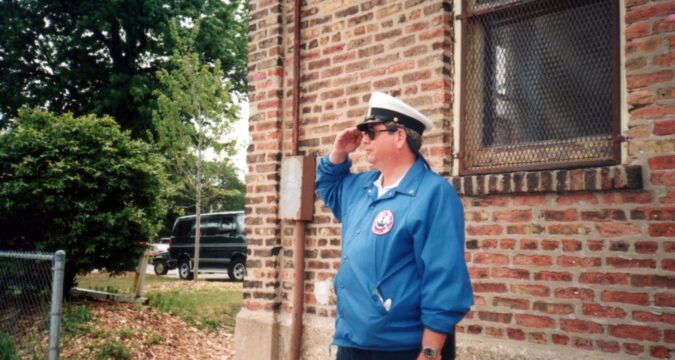
Jerome “Uncle Jer” Gavin died Sept. 1. He was not just my “uncle”; he was uncle to scores of lifeguards and junior guards he mentored over his decadeslong career working as a lifeguard for the Chicago Park District.
I first met Uncle Jer at Loyola Park Beach in Rogers Park in the 1970s. I ran up from the beach and he was in his captain’s uniform. “Where’s your whistle?” I dug through my pocket and showed it to him. I complained to the other guards that this guy took his work way too seriously. After all, we were all there to hang with our friends at the beach, party half the night and get paid for it. I soon realized Uncle Jer was serious about his work. The whistle was our lifeline to him — three short blasts, and he would be at our aid. Nothing was going to happen on his watch. He wanted to ensure we teenagers realized how serious it was to work the beach.
Uncle Jer did not look like the other guards who were fresh off swim teams with their V-shaped physiques, bronzed skin and sun-drenched hair. Uncle Jer was a little paunchy, had dark hair peppered with gray (which he blamed on us) and skin so white it was difficult to tell where his skin left off and the sunscreen began. What he lacked in muscle mass, he made up for in heart and dedication.
He stressed the importance of staying in shape in the event of a rescue and was not above poking fun at himself. He told the story of hearing a whistle, grabbing the oxygen, running through the sand only to use the oxygen on himself before tending to the victim.
He tried to act like a tough guy to the rookies, but we all soon realized he was a big softie. He was fatherly toward the female guards, advising us to stay away from bad boys and suggesting we find good Catholics with stable job prospects. He was practical like that. As for the young men, he considered them “knuckleheads.” He shook his head when he found them sleeping under the boats after partying all night, backflipping off the cement seawall or torpedoing, the act of jumping out of the Whaler as it traveled at full speed. He might have been envious of their youthful invincibility, but he was really concerned that no one get hurt. Not on his watch.
Many of those he mentored went on to careers in the service of others. They became nurses, teachers, firefighters, police officers, career lifeguards and paramedics. Uncle Jer once encouraged a guard to write a book about the park’s junior guard program. Once the book was written, Uncle Jer spotted the guard $5,000 to get the book published.
Uncle Jer saved countless people over the years — on and off the shore. He would scoop little children up after they fell into the water. He had more dramatic rescues, having received awards over the years. He could not save everyone, however.
Uncle Jer had two families — his home life and his lifeguard family. He was married and the father of three girls. One of his daughters, Katie, was born with cystic fibrosis and received a double lung transplant. The disease is often described like drowning since the lungs fill with mucus making it difficult to breathe. She died from complications at the age of 11, devastating Uncle Jer and his family.
Within his lifeguard family, Uncle Jer took a liking to one guard named Billy who was from a family both large in number and personalities. Billy was quiet, but Uncle Jer saw a gentleness behind his brawn. Billy was not sure what to do with his life and Uncle Jer mentored him until Billy decided to join the military. Billy suffered a bit of homesickness and questioned his choice. He made countless calls to Uncle Jer who reassured him that he would be OK. Billy died unexpectedly; the official cause was ruled suicide. Uncle Jer could not accept the ruling, believing Billy was adjusting well. I suspect Uncle Jer replayed in his mind over the years what he could have done differently with Katie and Billy. I can only hope his strong faith led him to acceptance.
Uncle Jer learned at a young age to live a life of character. He was kind, devoted, caring, empathetic, funny and giving. It was not lost on me he died on the last day of this year’s beach season.
Your watch has come to an end, Uncle Jer. Rest easy, my friend.
Sheila Rogers Clancy lives in Chicago. She was a Chicago Park District lifeguard at Loyola Park Beach in Rogers Park in the 1970s and ’80s.
Submit a letter, of no more than 400 words, to the editor here or email letters@chicagotribune.com.
https://www.chicagotribune.com/2025/09/18/opinion-chicago-lifeguard-jerome-gavin/