
Supreme Court: Lisa Cook Keeps Job – For Now, Lets Trump Fire FTC Commissioners
The Supreme Court on Monday handed President Trump a significant defeat – ruling 5-4 that his attempt to fire Federal Reserve Governor Lisa Cook was procedurally invalid and that the Fed’s century-old independence from presidential removal-at-will remains constitutionally intact. That said, it isn’t over for Cook – as the Court said she can stay in her job for now – while she fights in lower courts against Trump’s bid to oust her over allegations of mortgage fraud.

In a majority opinion authored by Chief Justice Roberts and joined by an unlikely coalition spanning Sotomayor, Kagan, Kavanaugh, and Jackson, the Court denied the administration’s application for a stay, leaving in place a lower court injunction that keeps Cook on the Board of Governors pending full litigation.
Concurring
Roberts
Kavanaugh
Jackson
Sotomyaor
Kagan
Dissenting
Alito
Gorsuch
Barrett
Thomas
The Court’s decision rests on procedure; Trump didn’t give Cook notice or a deadline to respond – as it was done via tweet. That, the majority held, is insufficient to terminate a presidential appointee serving a 14-year term on the body that controls the cost of money in the United States. The ruling leaves open whether the mortgage fraud allegations – two simultaneous primary-residence mortgage commitments signed just 14 days apart – would constitute adequate cause for removal once proper process is followed.
“At minimum, Cook was entitled to some explanation of the evidence at issue, some avenue for a response, and a deadline by which a response would be due,” the decision reads.
So, it’s not quite over – she just gets to keep her job, for now.
As I have repeatedly said, I believe Lisa Cook will be indicted for mortgage fraud.
— Pulte (@pulte) June 29, 2026
Cook, the first Black woman to serve on the Federal Reserve Board of Governors, has remained in her position despite Trump’s attempt to remove her in August 2025 – citing allegations of mortgage fraud that Cook has strongly denied. No president had previously fired a sitting Fed governor in the central bank’s 112-year history.
She was initially nominated by President Joe Biden and confirmed by the Senate in 2022. Biden renominated her in 2023 for a full 14-year term expiring in 2038. Under the Federal Reserve Act, members of the Board of Governors can be removed by the president only “for cause,” a protection intended to safeguard the central bank’s independence from political pressure.
FTC Commissioners F’d
And while the Fed can now remain ‘independent’ – The Supreme Court also ruled on Monday that Trump’s firing of a Democrat Federal Trade Commission member was legal – greatly expanding a president’s powers over the government and overturning the Court’s 1935 precedent that had recognized the authority of Congress to protect leaders of various regulatory agencies from being removed at will.
Overruling a landmark 1935 decision in a case called Humphrey’s Executor v. United States, the justices, in a 6-3 decision, invalidated tenure protections for FTC members enacted by Congress more than a century ago. Trump dismissed Rebecca Slaughter over policy differences. –Reuters
The ruling reversed a lower court which had blocked Trump’s 2025 dismissal of Rebecca Slaughter over policy differences – with the lower court citing protections for FTC members via the 1935 ruling.
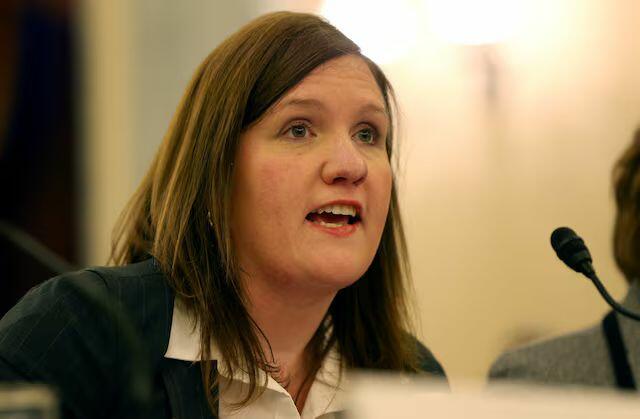
Slaughter, a Biden appointee, was one of two Democrat FTC members removed by Trump in March 2025.
A divided US Supreme Court expanded the president’s power to fire top government officials in a blockbuster decision that puts the White House firmly in control of potentially dozens of agencies that have long operated independently. https://t.co/xXqbyyQTgX pic.twitter.com/5rGAZdWPLe
— Bloomberg Law (@BLaw) June 29, 2026
Back To the Cook Case
In a letter posted to Truth Social, Trump accused Cook of making false statements on mortgage applications prior to her Fed service, describing the actions as “deceitful and potentially criminal.” Cook and her legal team have rejected the claims, provided rebuttal evidence, and argued that she was never given an opportunity to contest the allegations or receive due process. She has never been charged with any crime related to the matter.
In September 2025, the Department of Justice opened a criminal investigation into the mortgage allegations, issuing grand jury subpoenas related to properties in Ann Arbor, Michigan, and Atlanta, Georgia. The probe remains active as of May 2026 with no charges filed against Cook.
Cook filed suit in federal court in Washington, D.C., challenging the removal as unlawful. On September 9, 2025, U.S. District Judge Jia Cobb issued a preliminary injunction blocking the firing, finding that Cook made a strong showing that the removal violated the Federal Reserve Act’s for-cause provision. The D.C. Circuit Court of Appeals upheld the injunction on an emergency basis, allowing Cook to participate in Federal Open Market Committee meetings.
The Trump administration appealed to the Supreme Court, which on October 1, 2025, declined an emergency request to immediately remove Cook but scheduled full oral arguments for January 21, 2026. Cook has continued serving on the Board throughout the litigation.
Meanwhile, last September the DOJ opened a Grand Jury criminal investigation into Cook over the allegations.
Key Legal Issues
Trump v. Cook, centers on two core questions:
Whether the president has broad authority to interpret and apply the “for cause” standard unilaterally, or whether courts can review such removals.
The broader implications for the independence of the Federal Reserve and other independent agencies with similar statutory protections.
During oral arguments on January 21, 2026, justices across the ideological spectrum expressed skepticism about the administration’s position, questioning the lack of due process for Cook and the potential risks to central bank independence. Observers noted the Court appeared likely to side with Cook, at least on keeping her in place pending full resolution.
New Leadership at the Fed
The case unfolds against a major leadership transition at the Federal Reserve. Last month, the Senate confirmed Kevin Warsh as the new Chair of the Federal Reserve, succeeding Jerome Powell. Warsh, a former Fed governor and Trump nominee, has advocated for a “regime change” at the central bank, signaling a potential shift toward policies more aligned with administration priorities, including greater focus on lowering interest rates where appropriate while maintaining independence in decision-making.
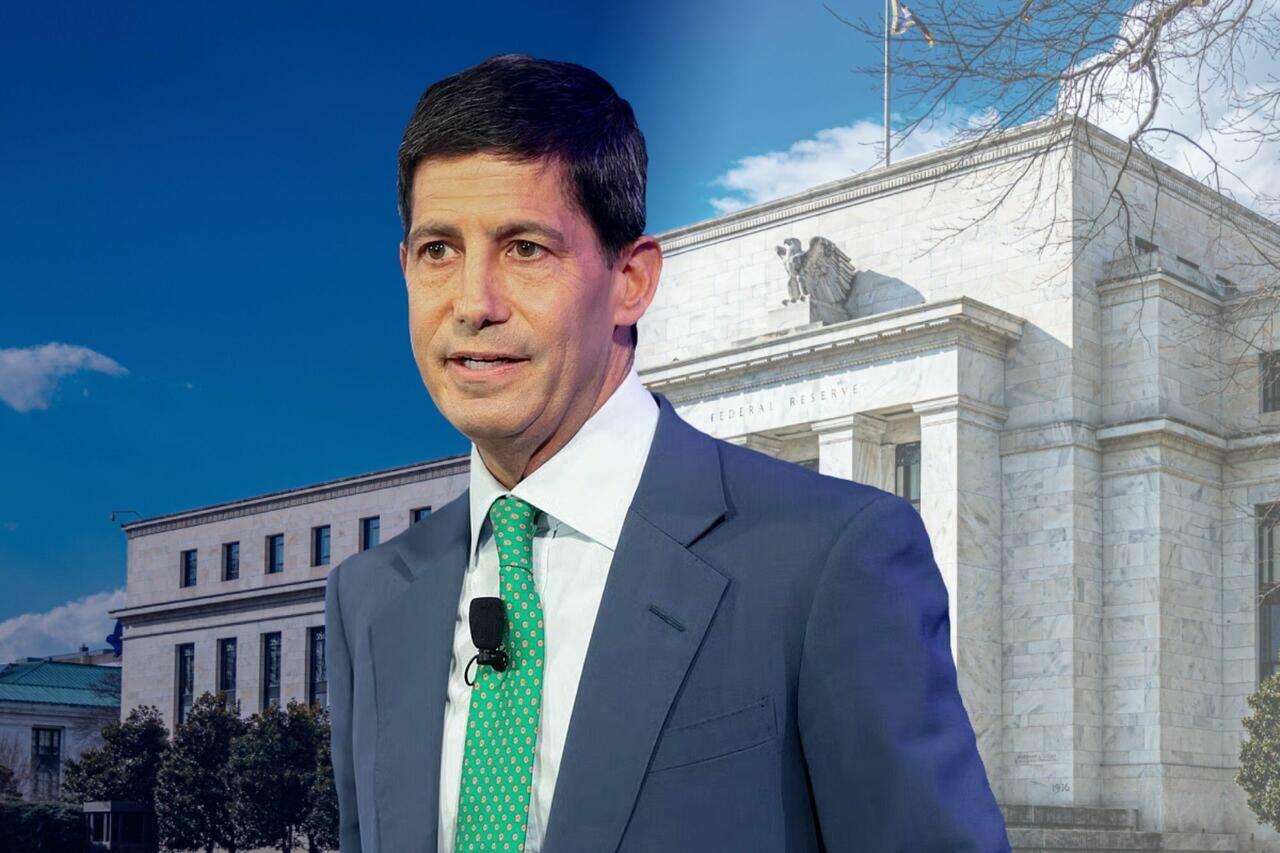
Warsh has largely stayed out of the Cook litigation during his confirmation process, declining to comment directly on the removal effort or pledge to defend her position. His ascension marks a new direction for the Fed amid ongoing debates over monetary policy, inflation pressures, and institutional independence.
According to Cook supporters, allowing at-will removals by the president could politicize monetary policy, undermining market confidence and economic stability. The administration has contended that the president retains ultimate executive authority under Article II of the Constitution. Cook, meanwhile, has described the case as determining whether the Fed will continue to set policy based on evidence and independent judgment or face political pressure.
Tyler Durden
Mon, 06/29/2026 – 10:20
https://www.zerohedge.com/political/supreme-court-blocks-trump-firing-fed-governor-lisa-cook