Women are too often missing from the tables where decisions are made, not for lack of interest or talent, but because many influential groups were not designed with women in mind. If your business association, board, or community group wants to modernize, it’s time to reconsider how and when you gather.
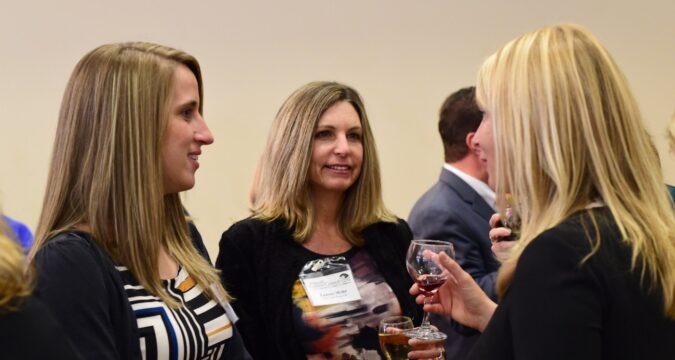
The case for including more working women on volunteer boards and at business events is strategic. Diverse boards perform better and draw wider audiences, as evidenced by the sell out crowd of more than 800 women who attended the Lehigh Valley Women’s Summit in June. Women help business groups thrive.
Juggling all the things
Women are often the default caregivers for young children, as well as for aging parents and disabled family members. They carry these roles while maintaining jobs that require their full attention during the traditional business day.
Additionally, many women do not have flexible work arrangements. Women in senior leadership may have more autonomy over their schedules, but that doesn’t apply to hourly employees or early-career professionals. Many simply can’t afford to lose paid time to attend a 2 p.m. volunteer meeting or a multi-day conference.
Working moms of older kids must also contend with the dreaded sports-arts-schoolwork-friends matrix of obligations, myself included in that cohort. Ironically, the people who are most skilled to juggle infinitely complex advocacy work are also the ones who are not given the opportunity to lead.
Time after time
During my time in the Women’s Business Council, I have observed that lunchtime and happy hour events and meetings tend to be highly successful for attendance. They give salaried and hourly workers a chance to attend without sacrificing income or stepping away from responsibilities.
People already expect to take a break mid-day, and those in structured work environments may be more able to step away briefly if it’s part of their designated lunch period. For happy hour events, parents can often swing having their coparent or another family member cover kiddo duties for a couple hours before dinner. Bonus point: moms can often be home in time for supper, bathtime and bedtime.
The Zoom where it happens
There’s no substitute for face-to-face interaction. In-person events are where connections deepen and partnerships begin. But when it comes to meetings, accessibility increasesexponentially with a virtual option.
Offering a Zoom link doesn’t dilute participation, it expands it. For working moms on a tight timeline, women with limited transportation, or those managing chronic health conditions, that flexibility can make the difference between engaging and being left out.
As we enter cold and flu season, hybrid options also protect our boards and groups from being super spreader events, allowing us all to continue operating and functioning healthily.
The price is right
Membership dues, gala tickets and professional development events are often priced with corporate budgets in mind. But many of the women we should be reaching, like entrepreneurs, nonprofit staff, educators, service providers, don’t have expense accounts.
To be truly inclusive, we need a mix: anchor events like summits and awards dinners, yes, but also casual, low-cost or free gatherings that eliminate financial barriers and encourage new participation.
A creative example: Palette of Possibilities
If you’re looking for a great example of this balance in action, join us for the Women’s Business Council’s upcoming event, Palette of Possibilities: How Creativity Shapes Solutions from 11 a.m. to 1 p.m. Sept. 25 at the Easton Area Community Center.
This lunchtime event includes networking, a panel of inspiring women leaders, and a hands-on creative activity that promises to be as energizing as it is insightful. It’s accessible, inclusive, and purposefully designed to accommodate a range of schedules, exactly the kind of event we need more of.
This is a contributed opinion column. Flo Scott is the chair of the Women’s Business Council for the Greater Lehigh Valley Chamber of Commerce. The views expressed in this piece are those of its individual author, and should not be interpreted as reflecting the views of this publication.