By Emily Brindley and Karen Brooks Harper, The Dallas Morning News
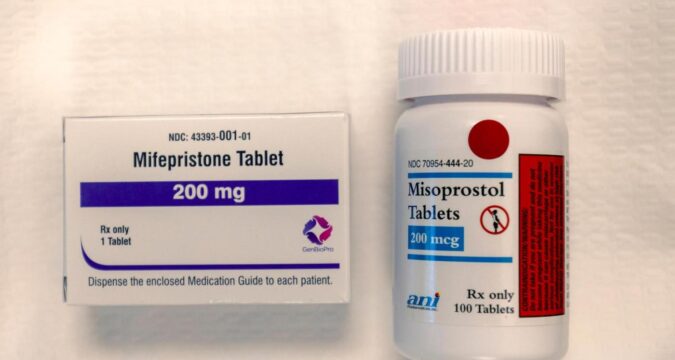
AUSTIN, Texas — Private citizens could sue makers or distributors of the abortion pill in Texas, as well as those outside the state lines that mail them to Texas residents, under legislation that advanced late Thursday.
House Bill 7, by Rep. Jeff Leach, R-Allen, would create a new enforcement mechanism in the anti-abortion movement’s fight against abortion pills.
The measure would create a pathway for private citizens to sue anyone who manufactures or distributes abortion medication within Texas — with exceptions for doctors performing the procedures for legal medical reasons under state law — or who mails abortion medication into the state.
After two hours of acrimonious debate, the bill won final passage in the Texas House on Thursday night on an 82-48 partisan vote. It is expected to pass the GOP-dominated Texas Senate early next week.
“I believe this bill is compassionate to its core,” Leach told House members during debate late Thursday. “The legal operations of the abortion industry in Texas have all but been shut down, but the abortion industry in Texas has not gone away. It has shifted tactics strategically. It’s moved from brick-and-mortar facilities to mailing abortion pills online… These pills are deadly. They are dangerous. And under current Texas law, these pills are illegal.”
The mechanism is similar to that created under Texas’ 2021 six-week abortion ban, which is sometimes referred to as a “bounty hunter” law.
The bill shields Texas hospitals and doctors who provide the drugs for legitimate medical reasons. It does not include those who dispense the pills to Texas women while they’re outside of Texas.
It does not target pregnant women in any way, Leach said.
“This bill ensures that women cannot be sued for receiving or obtaining abortion pills,” he said.
The legislation also protects the identities of women who have sought or obtained abortions or abortion pills and ensures that they cannot be subject to legal discovery petitions in lawsuits, a concern voiced by women’s advocates on both sides of the debate. It also prohibits “bad actors,” such as those who have committed sexual assault, family violence, abortion coercion or stalking, from filing suits under the bill, Leach said.
Democratic opponents said the bill endangers women even if it doesn’t directly target them by limiting their choices for help in a state that has denied most of their options to end dangerous or unwanted pregnancies.
The law sets up a frightening “bounty hunter” system that abuses the civil courts system to intimidate legal distributors and manufacturers, said Rep. Donna Howard, D-Austin.
“The way this bill is written, it would open Texas courtrooms to a $100,000 bounty-hunting entrapment scheme,” Howard said during debate. “I’m not a lawyer, but it doesn’t take a lawyer to see when the constitution is being put through a paper shredder.”
The bill is a resurrection of a measure that died during the Legislature’s regular session.
After the regular session ended, anti-abortion advocates urged Gov. Greg Abbott to add abortion to the first special session agenda, so that the abortion pill bill could be brought back onto the table. He did, and lawmakers revived the bill, with some changes, for the first special session.
The bill was then caught in the redistricting-related standstill of the first special session, and lawmakers revived it for a second time at the beginning of the second special session. Similar bills, with some changes, have been introduced this time around in both the Senate and the House.
Abortion pills are FDA-approved to terminate early pregnancies, up to 10 weeks gestation. In Texas, abortion is only legal in rare medical emergencies. It is illegal in all other cases, with no exception for early pregnancy, fatal fetal anomalies or for rape or incest.
Because of these laws, Texans seeking abortions have limited options. They can meet with an out-of-state provider over telehealth and have abortion pills mailed to them, or they can travel out of state for abortion care.
As the Legislature pushes the abortion pill bill forward, Texas officials are already working to tamp down on the mailing of pills in other ways.
Texas Attorney General Ken Paxton sued a New York doctor in late 2024, for prescribing and mailing abortion pills to a Texan. The attorney general also sent three cease-and-desist letters earlier this month, threatening two organizations and a doctor with legal action and hefty penalties if they do not stop mailing abortion pills into Texas.
It’s not clear that the attorney general’s actions have made much impact on the mailing of abortion pills.
Paxton’s office has struggled to enforce the Texas court ruling against the New York doctor. And one of the providers who received an August cease and desist told The Dallas Morning News that the letter won’t stop the organization from mailing the medications, and has instead increased the number of patient calls they’ve received from Texas.
In a different approach, anti-abortion advocates have also pushed for would-be fathers to file wrongful death lawsuits against doctors who prescribe abortion medication and others who assist pregnant women in accessing abortion care. Such lawsuits have been filed in particular by anti-abortion attorney Jonathan Mitchell, who’s credited with creating the so-called bounty hunter provision in Texas’ 2021 six-week abortion ban.
_____
©2025 The Dallas Morning News. Visit dallasnews.com. Distributed by Tribune Content Agency, LLC.