Allentown has once again been named one of the worst places to live for people with asthma.
The Asthma and Allergy Foundation of America just released its 2025 Asthma Capitals report, which ranks the largest 100 cities in the contiguous U.S. by how challenging they are to live in for people with asthma and this year, Allentown was ranked third worst in the country. The next closest major metropolitan area, Philadelphia, was ranked fourth worst.
Detroit, Michigan and Rochester, New York, were No. 1 and 2 on the list, respectively.
The ignoble accolade is nothing new for the Lehigh Valley, as the Allentown Metropolitan area was ranked third worst in 2022, and as worst in the nation in 2021, 2023 and 2024. It was also recently named as one of the most polluted metropolitan areas in the country by the American Lung Association.
The Lehigh Valley was higher than average for asthma prevalence relative to the rest of the population, ranking fourth in the nation overall. It was also above average for how many asthma-related emergency room visits there were, ranking sixth in the nation. Fortunately, it was only average for asthma-related mortality.
The Asthma and Allergy Foundation doesn’t just point out where asthma is a problem. It is putting its money where its mouth is, and Allentown has been selected to receive one of the foundation’s Health Equity Advancement and Leadership grants. According to the organization, these funds will go to Empowering Asthma Self-Management and Education Allentown, a program that does outreach alongside the Allentown Health Department and emergency medical services to serve older adults living with asthma and other chronic health conditions.
Dr. Douglas Corwin, pulmonologist for St. Luke’s University Health Network, said that factors that contribute to the Lehigh Valley’s asthma-aggravating air come down to several factors.
“It’s really a confluence of the geography of the area, plus the industry, plus the environment just come together to make it a really difficult place for people with asthma,” Corwin said.
Corwin said there are various triggers for asthma that exist all year round, like dust mite waste. There also are seasonal agitators that already are in effect or will be soon, such as ragweed pollen, which peaks in September, and mold that grows on dead leaves, which will be present throughout the fall.
“Sometimes people with asthma can be more sensitive to temperature changes as we get into those warm days, cold nights. Sometimes those temperatures can really cause difficulty with breathing,” Corwin said.
For those who want to take charge of their asthma, there are many things they can do. Corwin said that respiratory viruses that become more common toward the beginning of the school year can affect people with asthma worse, and hand washing, as well as getting the influenza vaccine, are good ways to protect against those infections. Those with really bad allergies may want to consider getting a High Efficiency Particle Arresting — better known as HEPA — filter for rooms where you will spend the majority of your time. You can also go to airnow.gov to view the air quality of the region and determine risks.
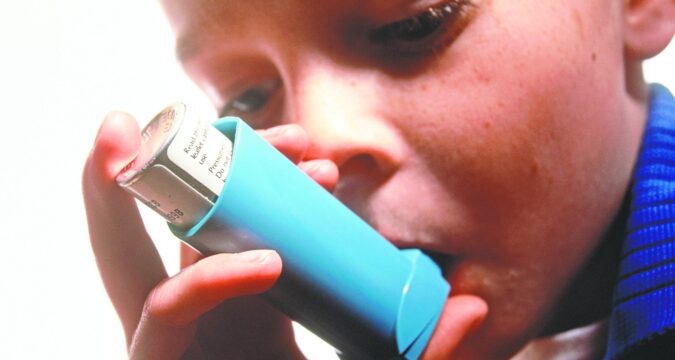
Having a safety plan in case an episode begins is also critical, he said, and this includes having a rescue inhaler handy as well as making sure you have adequate supply of maintenance inhalers and make sure you talk to your health care provider.
“One of the nice things is despite us having one of the worst allergy rates within the country, we have relatively low mortality. We have good health care to really stay ahead of everything. So we it’s really bad, but we try and stay ahead of it,” Corwin said.