By Gromer Jeffers Jr., The Dallas Morning News
EL PASO, Texas — A hearing to determine if Texas’ new congressional map should be in place for the 2026 midterm elections turns its focus to North Texas on Thursday.
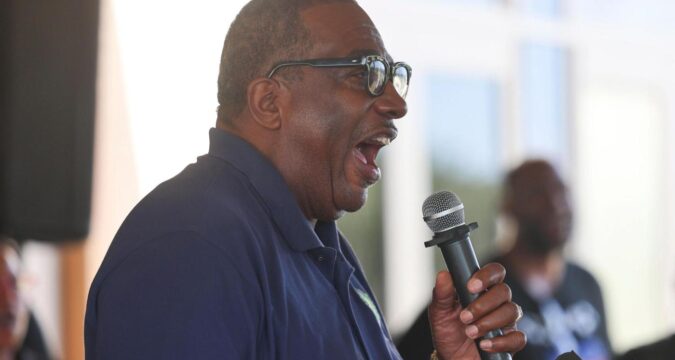
Day two of the hearing features testimony from state Sen. Royce West, D-Dallas. He’s expected to help the plaintiffs argue that the new congressional boundaries violate the Constitution by discriminating against minority voters — and that Texas Republicans did it intentionally.
The plaintiffs will also call state Rep. Senfronia Thompson, D-Houston, to testify.
Lawyers in Attorney General Ken Paxton’s office will try to unravel their testimonies.
That was the scene when the hearing convened Wednesday, with state Sen. Carol Alvarado, D-Houston, and state Rep. Joe Moody, D-El Paso, testifying they believed race was the catalyst for redrawing the boundaries.
The most talked about piece of evidence was a letter from Harmeet K. Dhillon, assistant attorney general for the Civil Rights Division at the U.S. Department of Justice. In it she warned Texas Gov. Greg Abbott and Paxton that four of the state’s majority-minority congressional districts were unconstitutionally gerrymandered. In 2021, however, lawmakers said the Texas maps were drawn in a color-blind approach. They gave testimony that confirmed that assertion during a May trial in El Paso about those 2021 maps.
Paxton has criticized the Justice Department letter, but Abbott in several media appearances said the Justice Department letter led to his call for a special session that included congressional redistricting.
During the hearing Paxton’s lawyers said neither Dhillon or Abbott were members of the Legislature and their opinions did not bind lawmakers to redraw the boundaries the way they did.
West could speak about the North Texas drama, where Republicans redrew congressional lines to flip District 32, represented by Rep. Julie Johnson, D-Farmers Branch, from blue to red. The new district stretches to East Texas and is heavily Republican.
Along with redrawing District 32, lawmakers packed minority voters into District 30, represented by Rep. Jasmine Crockett, D-Dallas. That district, controlled by Black voters since it was created after the 1990 census, now has a Black voting age population over 50%, when in 2021 that number was 46.7%.
District 33, represented by Rep. Marc Veasey, D-Fort Worth, was pushed out of Tarrant County, which is where Veasey’s political base resides. Johnson has announced she’s running in the new District 33, while Veasey is considering his options.
Three of the four districts cited by the DOJ, including Veasey’s, are held by Black or Latino representatives. The other seat is vacant and previously was held by Sylvester Turner, a pioneering Black politician who died in March.
West’s testimony will probably remain focused on the assertion that Republicans had race in mind when redrawing the congressional map.
Defense lawyers will likely point to West’s past comments that the redistricting saga was a power grab, signaling that politics was the predominant motivation.
Texas lawmakers redrew the boundaries after President Donald Trump said he wanted new maps that would net five Republican seats in Congress. Historically the party that controls the White House takes heavy congressional losses during midterm elections. Trump wants Republicans to maintain control of Congress after 2026 so he can continue to implement his agenda.
The new congressional boundaries would eliminate one Democratically held seat each from Dallas-Fort Worth, Houston and the Austin/San Antonio area.
District lines were redrawn in South Texas, pushing two seats currently held by Democrats toward stronger Republican majorities, according to an analysis based on 2024 election results.
©2025 The Dallas Morning News. Visit dallasnews.com. Distributed by Tribune Content Agency, LLC.