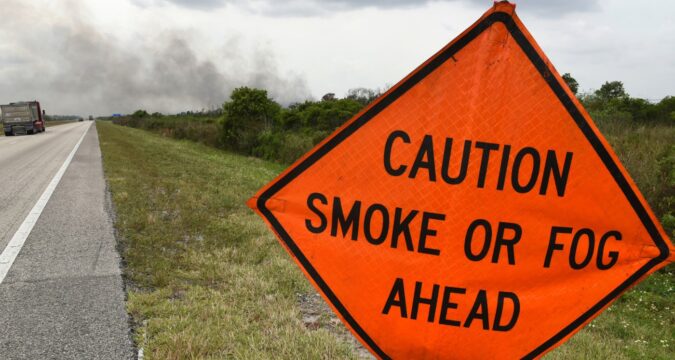
An extreme drought has combined with low humidity and strong winds to make fire risk exceptionally high in South Florida.
This week, the state’s Florida Department of Agriculture and Consumer Services fire danger map indicated the southern two-thirds of the state was either in a high, or very high, risk of fire.
At least 80 fires — some contained, some uncontained — burned across the state.
The largest fire in South Florida this week was one in Big Cypress National Preserve, south of Alligator Alley along Highway 29. It encompassed 25,000 acres.
The #NationalFire burning in Florida has now exploded to 25,000 acres in size. The #wildfire ignited yesterday in Big Cypress National Preserve and @NOAA‘s #GOESEast (#GOES19) has been tracking the smoke plume and heat from the blaze. @NWSMiami is cautioning residents about… pic.twitter.com/yXSIBlDjKx
— NOAA Satellites (@NOAASatellites) February 24, 2026
Smoke from the fire may drift southeast, affecting visibility in parts of South Florida.
People are the No. 1 cause of wildfires in Florida, according to the Florida Department of Agriculture and Consumer Services website.
The National Weather Service issued a red-flag warning, reminding the public to:
– Avoid open flames.
– Keep vehicles off dry grass.
– Avoid outdoor burning.
Burn bans have been enacted in about half the landmass of Florida, from Baker County on the Georgia border south to Palm Beach and Collier counties.
Many counties in Florida have enacted burn bans as a result of the current drought. (Courtesy Florida Forest Service)
This week’s cold front intensified the fire risk, as it brought high winds and very dry air into the region, with relative humidity plummeting to as low as 20%.
“Twenty to 25% relative humidity is pretty abnormal. We only really achieve that a couple days a year, maybe,” said National Weather Service meteorologist George Rizzuto. “It requires a strong cold front and a nice strong northwesterly flow to get some of that dry continental air all the way down to the Florida peninsula.”
Normal relative humidity for Florida’s dry season is 50% to 70%.
The Florida Forest Service’s Everglades District manager Kevin McEwan said 25% humidity is a concern anywhere in Florida. What really makes that a concern is if that’s coupled with high winds.
“Wind fans flames and makes it expand. If there’s just a little bit of wind, the fire would move and expand very slowly, but with the wind 15 to 25 mph it will push it faster and make a hotter fire.”
Extreme drought has affected areas of the Everglades, including those near Everglades Holiday Park on Friday, Feb. 20, 2026. (Joe Cavaretta/South Florida Sun Sentinel)
McEwan said that though outdoor gas grills were less of a concern, charcoal grills could be more dangerous.
“Charcoal grills, if you’re not paying attention, can certainly start something,” he said.
He suggested having a water source nearby to put out any accidental fires, and keep the grill away from dry grass.
Outlook
The dry trend will continue through the workweek.
Relative humidity will remain in the 30% to 40% range on Wednesday and Thursday, with Friday seeing a return to normal dry season humidity of around 60%.
The ongoing drought coupled with high winds and the cold front have made this week fire-friendly.
There are no significant rain chances this week until Friday and Saturday afternoon, which could produce scattered showers. There won’t be enough rain to impact the fire conditions or the drought, Rizzuto said.
Winds this week will be around 10 mph, ramping up to gusts of 20 mph on Thursday into Friday, keeping fire risk high.
Tips and fire laws
Palm Beach County currently has a burn ban, meaning all outdoor burning is prohibited, including yard waste, bonfires and fire pits.
Prohibited Items include: Yard trash, leaves, vegetation, bonfires, fire pits, and recreational burning.
Allowed activities: Contained gas or charcoal grills may be used with caution, but fire pits are not allowed.
Broward County does not have a burn ban in effect. If you are going to burn yard waste, the Florida Department of Agriculture and Consumer Services states: “Escaped yard waste burning is one of the leading causes of wildfires in Florida. Burning household garbage is illegal. This includes paper products, treated lumber, plastics, rubber, tires, pesticides, paint and aerosol containers. Only burn yard waste. If your fire escapes, you may be liable for costs of suppression and damage to the property of others.”